


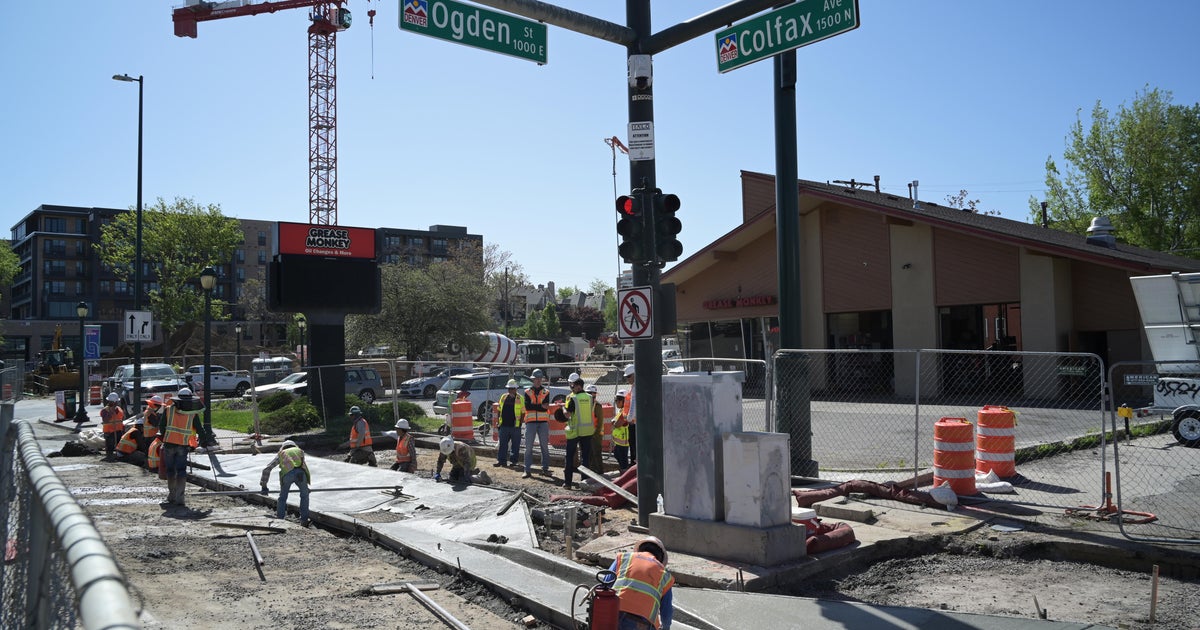
As construction on the East Colfax Bus Rapid Transit project moves closer to Aurora, business owners and neighbors along the corridor say they are bracing for short-term disruption while holding onto hope for long-term revival.
“We need to get back to our heyday here when there was a tram,” Dr. PJ Parmar, owner of Mango House on East Colfax, said. “Transit has always shaped this neighborhood.”
The East Colfax trolley system, essential to Aurora’s early 20th-century development, operated from the 1890s to the 1950s.
City and County of Denver via Denver Public Library
Today, buses brake over buried rails, but neighbors still depend on mass transit.
Parmar says many residents rely on RTD’s 15 bus, especially those who live nearby and work along the corridor or downtown.
“People depend on public transportation to get to work. They need to be able to count on it, and they need it to be fast. Denver’s transit system is anything but rapid compared to much of the world,” he said.
Planners say the BRT will save bus riders up to 30 minutes in travel time from Union Station to the R Line Station at I-225. The project promises more reliable and frequent bus service, arriving every 4.3 minutes during the day,
While Parmar acknowledged traffic slowdowns tied to BRT construction on the Denver side of Colfax have made some drivers wary, he says the Aurora portion of the project is expected to be more limited in scope.
“I’ve seen what’s happening in Denver, and it is slowing things down,” he said. “But from what I understand, the work in Aurora will mostly focus on bus stops. There will still be impacts, but I’m not overly worried. The long-term vision of improving transportation is a good one.”
CBS 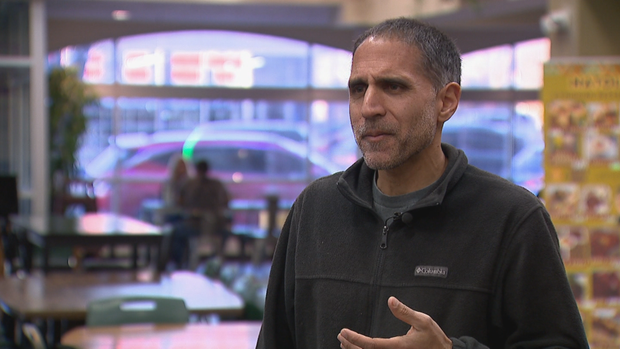

That long-term outlook is what project leaders emphasized during a community open house this week.
Jonathan Stewart, the project director for the East Colfax BRT, said construction in Aurora is scheduled to begin this spring, starting just east of Yosemite Street.
“It’s going to look different than Denver,” Stewart said. “Instead of long stretches of lane closures, construction in Aurora will be more targeted. We’ll focus on specific areas like Havana Street and near I-225, complete the work, and then move on.”
In a statement, Aurora Mayor Mike Coffman went on to explain that difference, saying, “Denver has an advantage of having one-way streets that run parallel to East Colfax on both sides where traffic, displaced by the dedicated BRT lane, can go.”
“However, even if there were no obstacles for Aurora to have a dedicated lane in the middle of East Colfax, I still would not be in favor of doing it,” Coffman continued. “Denver’s construction process has been long and continues to be tough on East Colfax businesses and a nightmare for drivers.”
All Aurora stations will use enhanced 15L shelters with BRT amenities, including ticket vending machines, fare validators, emergency telephones, security cameras, and a public announcement system. Stations that intersect with north and south high-capacity transit services will have passenger information displays. Platforms at Havana, Moline, Peoria, and R Line will offer level boarding.
Stewart said lessons learned during the Denver phase of construction are shaping how the project is being handled in Aurora, especially when it comes to minimizing business disruptions.
“We’re being more intentional,” he said. “We’re not starting work until we’re ready to commit full resources to an area, do the work, and get out. That way, businesses are impacted for a shorter amount of time.”
Hyoung Chang/The Denver Post via Getty Images 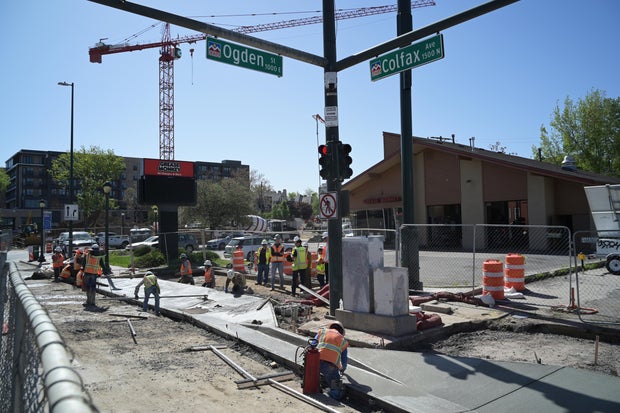

City officials and RTD representatives also shared information about resources available to small businesses along the corridor, including impact assessments and support programs for areas expected to see the most construction.
For Parmar, the concern extends beyond his own doors to the health of the entire neighborhood.
He says the stretch of Aurora’s Colfax has already endured years of economic decline. Several big-box stores on the next block, including Walmart, Walgreens, Family Dollar, and Dollar Tree, have closed and boarded up within the past few years.
“Mango House is doing well,” he said. “I worry more about the surrounding blocks that already look closed and boarded up. This neighborhood has a lot of mom-and-pop businesses that you come to on purpose. People will find their way here, even if it’s a little harder for a while.”
He hopes projects like BRT and the Downtown Aurora Development Authority can help reverse years of decline.
“The store closures here had nothing to do with BRT,” Parmar said. “They were part of a longer decay. But investments like this, if done right, can help make this a brighter place to live.”
The East Colfax BRT project is expected to be completed by the end of 2027, with leaders promising faster, more reliable transit and renewed investment along one of Aurora’s most historic corridors.