


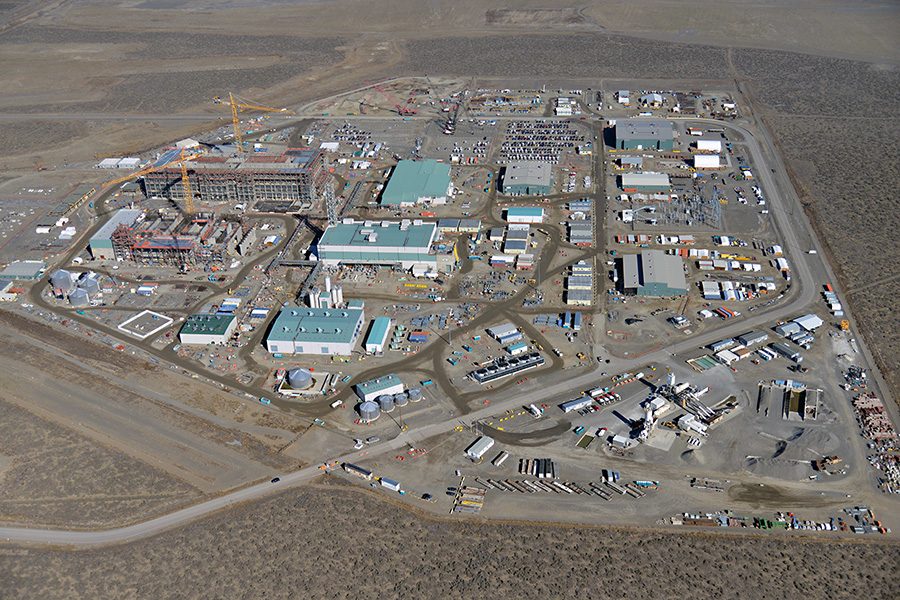
Federal officials are pushing to have more of the hazardous waste at the Hanford site treated by a cheaper and faster method than solidifying it in a glass form at the now operating Waste Treatment and Immobilization Plant.
The U.S. Department of Energy is seeking a change to its state permit for cleanup efforts to allow waste created from the vitrification process to be instead converted to grout rather than vitrified as well. That grout would then be moved off site for long-term storage as currently required under cleanup agreements and orders.
“Advancing this permit modification reflects our commitment to teamwork, responsible stewardship of taxpayer investments and a practical approach to cleanup,” said Ray Geimer, manager of DOE’s Hanford Field Office, in a statement. “By creating a more efficient pathway for managing secondary waste produced as a byproduct of the glass-making process, we can keep treatment operations moving and expedite the cleanup mission.”
The state Department of Ecology confirmed to the Tri-Cities Area Journal of Business that it is working with DOE on the proposal, which was submitted on Feb. 25. That initiated a 60-day comment period that will be conducted by DOE and Ecology will be required to provide a response to the proposal 30 days after that comment period ends, which would come at the end of May.
The Hanford plant, better known as the vitrification or vit plant, is currently in the hot commissioning phase before it begins operating 24/7 to treat 56 million gallons of hazardous waste stored in 177 underground tanks, a legacy of nuclear weapons manufacturing dating back to World War II and the Cold War. The facility cost billions of dollars and took decades to build.
As of early December, the facility produced 20 stainless steel containers containing low-activity waste immobilized in a glass form weighing a combined 140 tons. However, DOE said that for every gallon of tank waste it vitrifies, another one to three gallons of less hazardous secondary waste is created as a byproduct.
It was not immediately clear what the estimated cost savings from grouting the waste byproducts created via vitrification would be, though DOE said that change would allow the vit plant to process up to 20% more tank waste.
The public is encouraged to participate in a comment period on the grout proposal by attending a public meeting at 5:30 p.m. March 24 at the Richland Public Library.
Grouting hazardous waste at the site has been proposed in the past and pushed back against by tribes, environmental groups and state agencies. In fall 2025, concerns raised by U.S. Sen. Patty Murray, D-Washington, that DOE was reportedly considering scrapping the vitrification process in favor of grouting raised alarms.
Energy Secretary Chris Wright denied reports that his agency was looking to not start vitrifying waste. The vit plant began its hot commissioning phase by a required Oct. 15 deadline.
However, a settlement between state Ecology officials and DOE finalized in January 2025 does allow for grouting the low-activity portion of the waste from 22 tanks in Hanford’s 200 West Area for offsite disposal.