


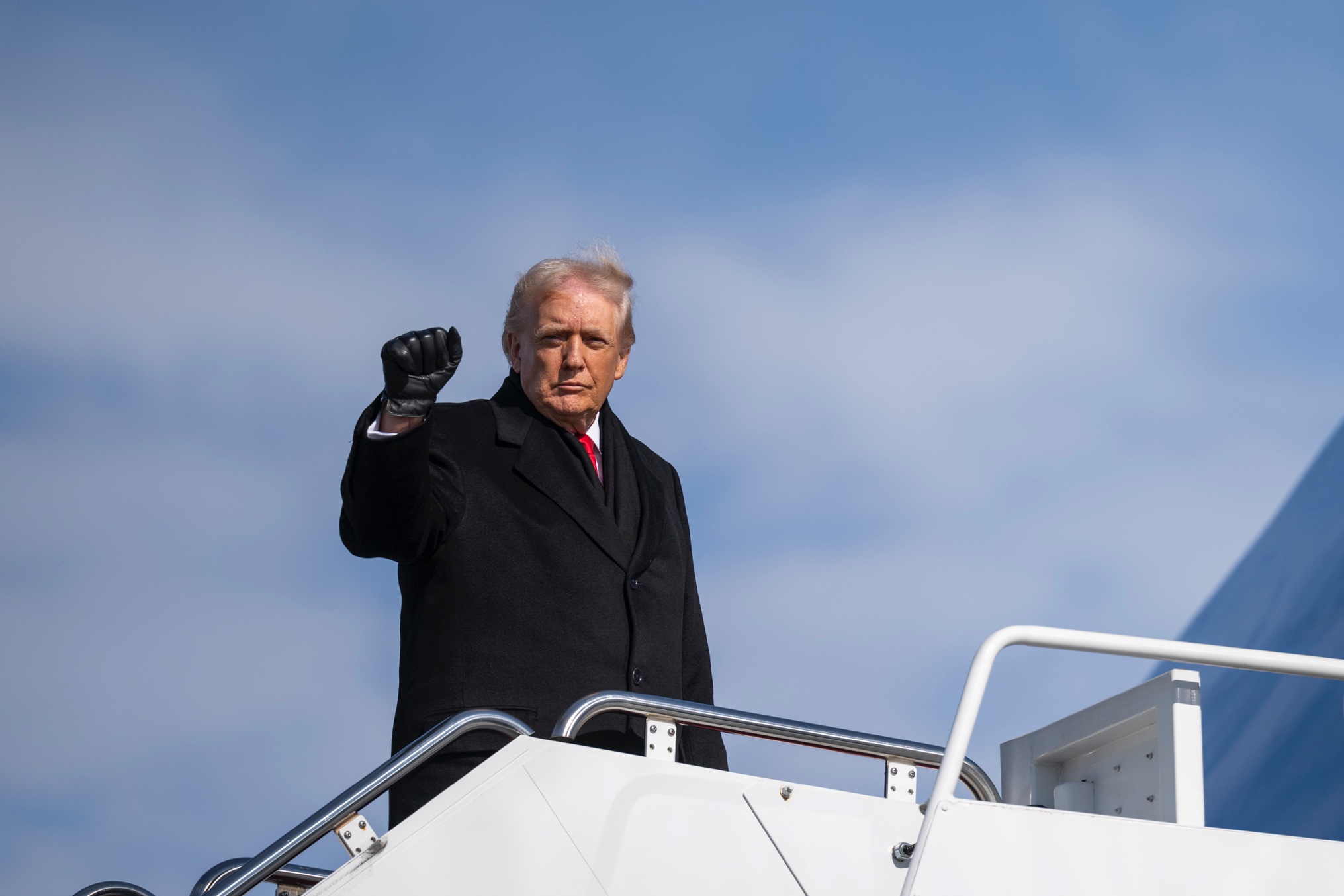
The international business editor of the United Kingdom’s Daily Telegraph, Ambrose Evans-Pritchard, says the United States economy is at risk of a massive bubble by the end of this year.
He writes that “all the levers of economic stimulus are pushed to the maximum, which sets the conditions for torrid overheating and an unstable boom”.
The factors influencing this are bank deregulation, credit expansion, lower interest rates, a weakening US dollar and quantitative easing, further exacerbated by Trump’s US$2000 tariff dividend to each American before the mid-term elections.
As Pritchard says, this is either a courageous experiment in running the economy hot or an insane mix of the worst policies since the 1970s, when my namesake Anthony Barber, who was UK Chancellor of the Exchequer, engineered a huge boom with corporate tax cuts. The boom lasted 18 months to be followed by a horrendous bout of “stagflation” or runaway inflation without growth, the worst of all worlds.
On a much smaller scale, this scenario bears a strong similarity to the decisions of the Labour/NZ First coalition in 2020 to encourage lower interest rates, a loosening of credit restrictions and printing of money by the Reserve Bank, otherwise known as quantitative easing.
To be fair, those decisions were driven by a desire to save businesses and jobs threatened by the pandemic. But the conditions went on for far too long – and it is hard to argue with the result over the past four years: stubborn inflation and minimal growth, an economic state of affairs that appears perilously close to “stagflation”.
An inquiry into the Reserve Bank is totally justified by New Zealand’s mediocre performance since covid, although delaying it for nearly three years seems bizarre.
A prompt inquiry in 2024 may well have been more beneficial to the present government than leaving it so close to the next election. By then the public’s ability to link the Reserve Bank’s, and by implication the Labour/NZ First coalition’s, actions and decision making to the state of the economy will have faded.
The healthy position of both those parties in the opinion polls suggests the public is no longer interested in blaming them for the recession, which is incredible, considering the damage their policies wrought.
Meanwhile the agriculture sector continues to bolster New Zealand’s export earnings. The Ministry for Primary Industries’ Situation and Outlook Report forecasts growth in exports of all commodities except seafood for 2025/26.
The forecast is for a 3% increase in value to $62 billion with greater volumes of dairy, forestry and horticultural products and higher value of meat exports.
The dairy price was forecast to fall because of higher volumes chasing lower demand but the latest online auctions have posted an increase after several lower results. Time will tell how sustainable this uptick proves to be.
In calendar year 2025, meat exports rose 19% to $11.7bn and are expected to reach $13.2bn for the June year, based on higher demand from all the main markets. The US took 17% more product, up to $3.2bn despite the tariffs, while China was relatively flat at $2.5bn, followed by the European Union, 42% higher at $1.8bn. Exports to the UK went up 64% and to Canada 52%.
In total the five main markets bought $9bn, equivalent to more than three quarters of all exports. There were some standout performances within these markets – the value of beef sales to the UK rose by 378%, which is entirely attributable to the NZ/UK free trade agreement, while sales of frozen sheepmeat to Saudi Arabia reached almost $100 million. Lamb sales to the EU, the most valuable market, rose by 50%, mainly because of a shortage of domestic lamb, which was 3.4% lower than the previous year.
The unpredictability of global affairs makes it almost impossible to foretell what will happen beyond later this year, but if the US economy continues at its present rate, the New Zealand economy and our exports should perform positively.
One cloud on the horizon for NZ’s US beef exports is US President Donald Trump’s decision to lift Argentina’s tariff free quota from 20,000 to 100,00 tonnes, specifically to enable supplies of lean beef trimmings to ensure “affordable beef for the American consumer”. This move will cut directly across our most important beef market.
Furthermore, if the dire predictions of an overheated US economy turn out to be correct, we need to brace ourselves for a challenging economic and geopolitical environment.
Farmers will hopefully benefit from at least one more year of strong demand but I’m not sure either prospective government will have an easy three-year term up to 2029.