


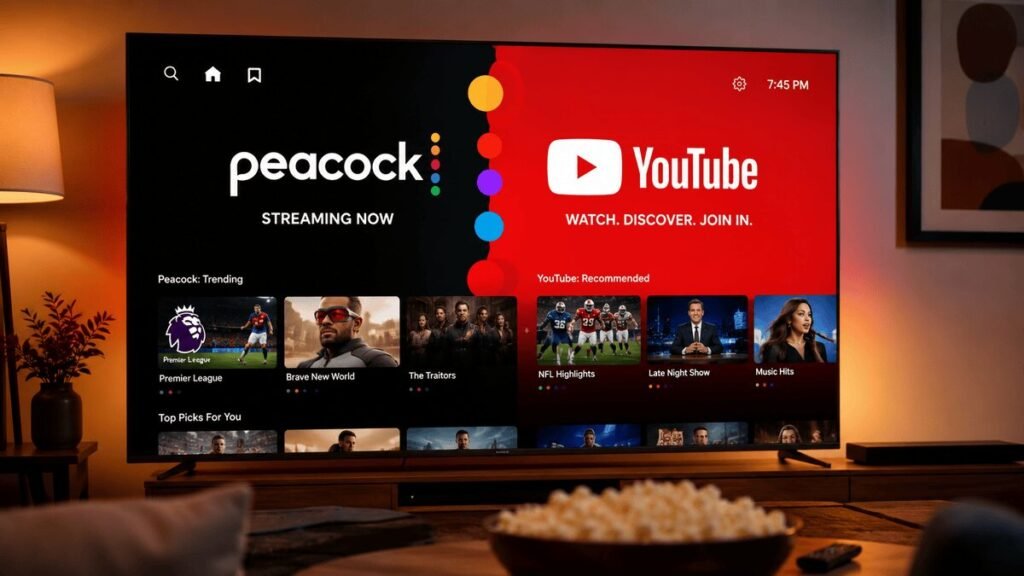
Peacock Is Coming to YouTube Premium in a Landmark Deal
The line between traditional TV and the internet’s biggest video platform just got a lot blurrier.
NBCUniversal’s Peacock is officially heading to YouTube, in a deal that could reshape how millions of Americans stream. Starting early next year, the entire Peacock library — from NFL and NBA games to the Minions and the Real Housewives — will come bundled into YouTube Premium subscriptions in the US.
For NBCUniversal, it’s the largest distribution partnership Peacock has ever signed. For YouTube, it’s another sign of its growing pull in Hollywood. And for viewers, it means a lot more premium content living inside an app they already open every day.
What the deal actually includes
Here’s the headline: all of Peacock’s content will be folded into YouTube Premium, the ad-free, download-enabled version of the platform.
That means NBC Sports’ full portfolio — including the NFL and NBA — plus Universal films like the Minions franchise, and originals from Peacock and Bravo such as the Real Housewives shows and “Love Island USA.” All of it becomes available to Premium subscribers without leaving YouTube.
NBCUniversal and YouTube announced the multi-year global strategic partnership on July 27, 2026, describing it as Peacock’s largest wholesale distribution partnership to date. Beginning in early 2027, Peacock Premium will be included in a bundle with YouTube Premium, making it immediately available to millions of existing subscribers. Media Play NewsMedia Play News
Crucially, this is more than a simple bundle. Rather than just offering Peacock as a separate login, the two companies plan to integrate the service directly into the YouTube viewing experience — so viewers can watch Peacock’s sports, shows, and films without ever leaving the platform.
The price picture
The economics are eye-catching for anyone weighing their streaming spend.
YouTube Premium plans start at $8.99 per month, offering videos without ads and the ability to download most content depending on the tier. Peacock Premium, by contrast, currently costs $10.99 per month on its own.
In other words, the price of the standalone Peacock subscription is higher than the entry point for YouTube Premium — which will soon include Peacock as part of the package. A person familiar with the agreement said there will be no change to YouTube Premium’s pricing tied to the launch of the partnership, though subscribers will get additional options to customize their subscriptions. The Hollywood Reporter
For existing YouTube Premium members, that’s a meaningful bump in value at no obvious extra cost.
Why NBCUniversal did it
For NBCUniversal, the logic comes down to one thing: reach.
“With this agreement, Peacock accelerates its next phase of growth by bringing the service to millions of YouTube Premium subscribers, driving long-term value for our business,” said Matt Strauss, chairman of NBCUniversal Media Group. In an interview, Strauss framed the calculation simply — the first question was whether the deal would accelerate Peacock’s long-term growth, and the answer was yes. He added that Peacock will now become one of the largest domestic streamers, significantly expanding its audience. CNBC
The scale on offer is enormous. According to YouTube’s subscription page, it has over 125 million global Premium members. Even a fraction of that base translates into a huge potential lift for Peacock. CNBC
The timing also matters. Peacock, which launched in July 2020, turned its first-ever quarterly profit in the second quarter of 2026, and counted 48 million paying subscribers as of the end of June after adding 2 million during the period. Riding that momentum into a distribution deal of this size is a statement of ambition. CNBC
Investors seemed to like it. Parent company Comcast’s stock rose more than 3% in midday trading following the news.
How the partnership came together
The deal has been months in the making, and it started at the top.
Comcast co-CEO Brian Roberts reached out to YouTube’s CEO more than nine months ago to initiate talks, according to a person familiar with the conversations. After a meeting between the two executive teams at Google’s offices, the companies began brainstorming partnerships — eventually landing on this one. The Hollywood Reporter
The framing from inside the deal captures the strategy neatly. As one source put it, audiences today simply don’t think in terms of platforms anymore. If viewers are spending their time on YouTube, the thinking goes, that’s where premium content needs to be.
A different path from the “walled garden”
The partnership reflects a deliberate philosophy at NBCUniversal — and a notable break from some rivals.
During Comcast’s recent earnings call, co-CEO Mike Cavanagh said that while other media companies have taken a “walled garden” approach to their content, NBCUniversal will keep looking for opportunities to partner, bundle, and exhibit other people’s intellectual property across its theme parks and media platforms.
That open-door stance has already produced a string of deals. Peacock has previously partnered with platforms including Apple and Amazon’s Prime Video, as well as Roku. The YouTube agreement is the boldest expression yet of that willingness to meet audiences wherever they are.
“This partnership brings NBCUniversal’s world-class content and iconic franchises to YouTube’s unmatched scale and global platforms,” said Cavanagh, describing it as part of a broader strategy of partnering with industry leaders to drive growth. B97.5
A moment of upheaval in media
The deal lands during a period of intense change across the entertainment business.
Traditional media companies like NBCUniversal, Warner Bros. Discovery, and Disney have all been chasing new ways to boost revenue and profitability, even as platforms like YouTube and TikTok grab a rising share of viewers’ time. The old model — built on pay-TV bundles — continues to erode as consumers migrate to streaming.
Consolidation is everywhere. Paramount Skydance has agreed to acquire Warner Bros. Discovery, Fox Corp. reached a deal to acquire Roku, and Comcast is preparing to spin off NBCUniversal within the next year. While that planned spinoff has stoked industry hopes for a wave of mergers, Cavanagh and others have played down that expectation, pointing instead toward partnerships and bundles — exactly like this one.
The sports and advertising angle
Two other pieces of the deal are worth watching closely: live sports and advertising.
Live sports remain the biggest audience magnet for both streaming and traditional TV, and YouTube has been muscling into that space. It aired its first-ever live NFL game last year, and the league has continued talks with non-traditional players like YouTube and Netflix. As part of this partnership, NBC Sports will serve as a production partner for select live sporting events on YouTube — much as it did for that first NFL broadcast.
The agreement also extends NBCUniversal’s multi-year distribution deal with YouTube TV, the streaming-only pay-TV bundle, and covers distribution of YouTube, YouTube TV, and Premium across Comcast’s Xfinity cable platforms and Xumo.
On the advertising front, the deal deepens the two companies’ ad partnership, allowing NBCUniversal to monetize advertising for its Peacock content on YouTube. With ad-supported tiers now a key growth engine across the streaming industry, that could prove just as valuable as the subscriber gains.
The bottom line
For years, YouTube and premium streamers occupied different worlds — one built on creators and clips, the other on prestige shows and live sports. This deal collapses that distinction.
Come early 2027, YouTube Premium subscribers won’t have to choose between a viral video and Sunday Night Football. Both will live under the same roof. And in an industry racing to keep audiences from drifting away, that kind of convenience may be exactly the edge NBCUniversal is betting on.