


Shazam for Birds: How an AI App Made Millions Birders,
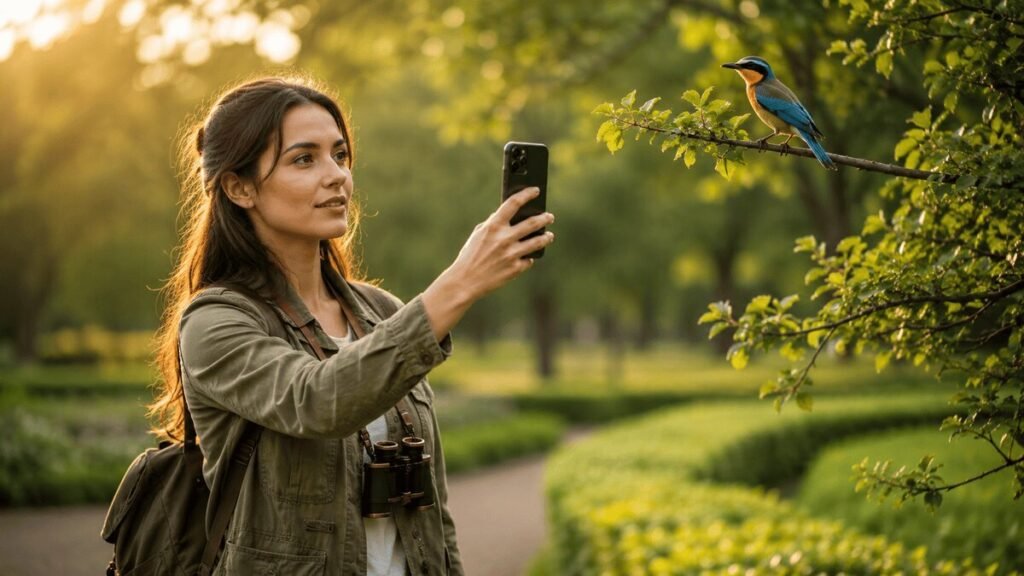
Point your phone at a chirping tree, and within seconds it tells you exactly which bird is singing. It sounds like magic. For millions of people, it’s become a daily habit.
The app behind the phenomenon is Merlin Bird ID, and it’s doing for birdsong what Shazam did for pop music — turning a mystery in the air into a name on a screen. Along the way, it’s quietly reshaping who gets to call themselves a birder.
From grandfather’s binoculars to a phone in the pocket
Megan Szostak was, in her own words, always a “bird kid.”
The pull to watch and appreciate the natural world — and the birds moving through it — has been part of her since childhood. It started with a deeply personal gift: her late grandfather’s binoculars, handed down to her after he died. Armed with those and a field guide at her home in San Francisco, the young Megan began identifying birds from an early age.
Now 26, her toolkit has grown to include something her grandfather never could have imagined — an app on her phone.
“I had friends who probably wouldn’t describe themselves as birders, but more just curious about nature and the world around them, recommend it to me,” Megan said. That word-of-mouth path — from casual nature-lover to committed user — is exactly how Merlin has spread. Yahoo!
For Megan, it hasn’t replaced the binoculars or the field guide. It’s slotted in beside them. “I think that it’s been a really great tool that I’ve integrated into my birding routine,” she said. Yerepouni Daily News
She’s far from alone.
A booming download count
Merlin Bird ID was developed by Cornell University’s Lab of Ornithology, and its growth has been staggering.
The app has been downloaded 12 million times in 2026 alone, according to director Jessie Barry, who says it has racked up 42 million downloads overall. For a tool built around a niche hobby, those are numbers you’d expect from a mainstream lifestyle app. Yahoo!
Several forces appear to be driving the surge. Heatwaves have pushed more people outdoors and into their local green spaces. A younger generation is discovering birding as a low-cost, screen-optional way to reconnect with the natural world. And the technology has simply become good enough to make the whole thing feel effortless.
Whatever the mix of reasons, the trend is unmistakable: apps like Merlin are booming, and Merlin is leading the flock.
From 285 species to nearly every bird on Earth
The leap in what the app can actually do is where the story gets genuinely impressive.
When Merlin first launched in the US in 2014, its machine learning systems could identify 285 common bird species from photos. Impressive for its time — a real feather in its cap — but modest by today’s standards. Yahoo!
Fast forward a little over a decade, and the transformation is dramatic. The app can now identify 11,000 species of birds — roughly as many as exist in the entire world. Yahoo!
In other words, Merlin has gone from recognizing a few hundred backyard regulars to covering very nearly every bird species on the planet. Point it at almost anything with feathers, and there’s a strong chance it knows what you’re looking at.
The two ingredients: AI and an army of birdwatchers
How did a bird app pull off that kind of expansion? Barry credits two things working in tandem.
The first is artificial intelligence. The app converts a bird’s song or call into a visual representation — essentially an image of the sound — and then uses computer vision techniques to spot the tiny differences that distinguish one species from another. It’s the same underlying trick that lets Merlin identify a bird by look, song, or call, all in real time.
The second ingredient is human, and it’s just as important. Barry credits “an amazing community of global bird watchers who are able to submit their recordings” — a flood of real-world data that continuously trains and sharpens the technology. Yahoo!
That’s the quiet genius of the model. Every enthusiast who records a bird call is, in effect, helping teach the app. The more people use it, the smarter it gets, and the smarter it gets, the more people use it. It’s a virtuous cycle with a global reach.
Not quite perfect — and that’s okay
For all its wizardry, Merlin isn’t infallible, and experienced birders are quick to point that out.
Seasoned birdwatchers would be the first to say the app doesn’t always get it right. A confusing call, overlapping songs from multiple species, or an unusual regional variant can still trip it up. The technology is a powerful assistant, not an oracle. Yahoo!
That caveat matters. There’s a healthy tension in the birding community between embracing the convenience of AI and preserving the hard-won skill of identification by ear and eye. For many longtime birders, the joy is partly in the difficulty — in learning to distinguish a warbler’s song without a phone whispering the answer.
But for newcomers, that same difficulty has long been a barrier. Flipping through a 500-page field guide to place a fleeting glimpse of brown feathers is enough to make anyone give up. Merlin lowers that wall dramatically, letting curious beginners get an answer — and a small thrill — almost instantly.
Turning curiosity into conservation
There’s a bigger picture behind the fun, and it’s one Barry and the Cornell Lab clearly care about.
Every identification, every recording, every logged sighting adds to a vast and growing dataset about where birds are and how their populations are faring. That information isn’t just trivia — it’s a resource for scientists tracking the health of ecosystems and the pressures facing bird life around the world.
The stakes are real. Bird populations in many regions have declined sharply over the past half-century, and reliable, large-scale observation data is one of the most valuable tools conservationists have. An app that turns millions of casual walkers into accidental citizen scientists is, in that light, more than a novelty.
The hope is that the tool does more than name birds. By helping people notice the creatures around them — really notice them — it might also help people care about protecting them.
A gateway, not a replacement
What’s perhaps most striking about Merlin’s rise is how it fits into people’s lives. It hasn’t stamped out traditional birding; it’s widened the door.
Megan’s story captures the balance. The binoculars from her grandfather still hang around her neck. The field guide still has its place. The app is simply another instrument in the kit — one that lowers friction, sparks curiosity, and occasionally reveals a bird she might otherwise have missed.
For a hobby once seen as the preserve of patient specialists with well-worn guidebooks, that’s a quiet revolution. A pocket-sized bit of AI has made the sky overhead a little more legible — and invited millions more people to look up.