


Washington (CNN) — The US economy grew at a much slower pace in the final months of 2025 as the historic government shutdown weighed on economic activity, ending a year that saw the weakest growth since the pandemic.
Still, it was far from the worst-case scenario economists feared when President Donald Trump unveiled his sweeping tariffs last spring. The economy grew in 2025, despite tariffs, an aggressive clampdown on immigration and one of the weakest stretches of job creation since the Great Recession, largely thanks to wealthy consumers who continued to spend.
Gross domestic product, which measures all the goods and services produced in the economy, registered at an annualized rate of 1.4% from October through December, the Commerce Department said Friday. That’s a marked slowdown from the 4.4% rate in the third quarter, and lower than the 1.9% rate economists projected in a poll by data firm FactSet. GDP is adjusted for seasonal swings and inflation.
Overall, the economy grew by 2.2% in 2025, the slowest pace since 2020.
The fourth-quarter reading was delayed a month because of last year’s government shutdown. Estimates of how much GDP shaved off in the October-through-December period range from a quarter percentage point to as much as 1.5 percentage points, with economists widely expecting the economy to recoup most of those losses in the current quarter.
Cuts in federal spending and consumers pulling back slightly on goods purchases took a toll on fourth-quarter GDP, according to the report.
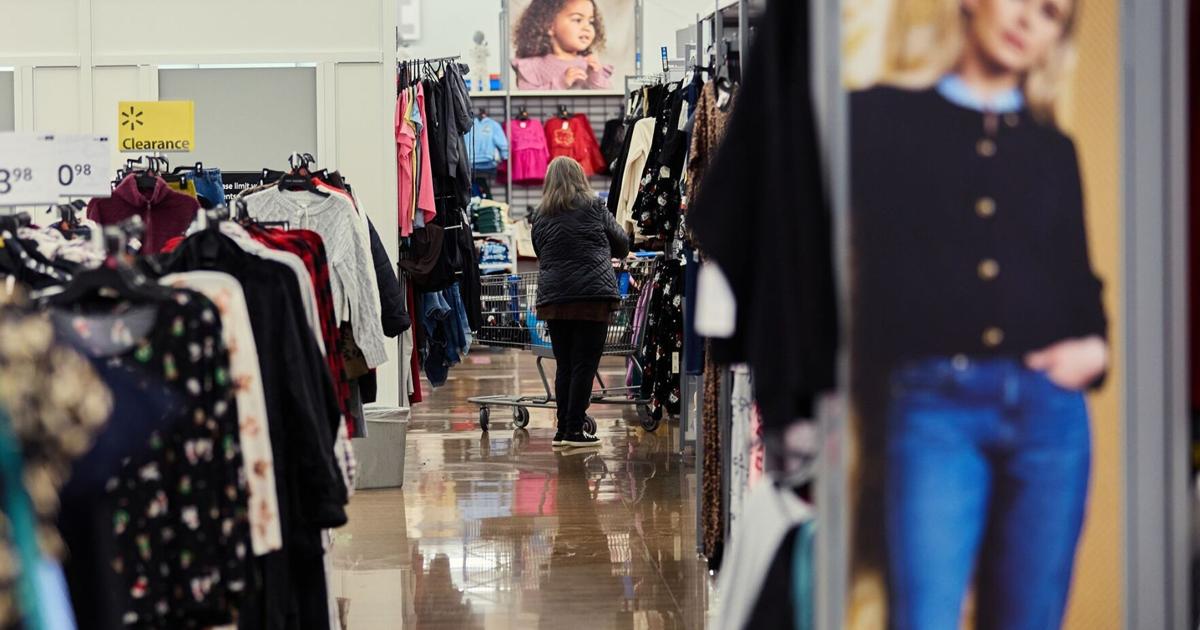
Consumer spending, the lifeblood of the US economy, slowed in the fourth quarter to an annual rate of 1.4%, the weakest pace since early 2025. Over the past year, spending has been uneven by income bracket, with the poorest households buckling under the weight of rising debt, a slowing labor market and cumulative inflation over the past several years.
Meanwhile, business spending edged higher to 3.7% from 3.2% in the prior three-month period.
Stephanie Roth, chief economist at Wolfe Research, told CNN that last year’s slower growth, compared to prior years, was “great given how much labor supply is down.”
“You could call it ‘Goldilocks,’” she said.
Income gains and savings slip while inflation picks up
A separate Commerce Department report released Friday showed that consumer spending remained in the black during December; however, the supports propping up those purchases grew weaker; and inflation heated up to its highest rate in nearly two years.
Consumer spending rose by 0.4% in December, but when factoring in inflation, that pace was just 0.1% from November, according to the shutdown-delayed report originally scheduled for January 29.
Personal incomes rose 0.3% for the month, in part pushed higher by a substantial settlement made to Maui wildfire victims. When taking inflation into account, personal income growth was flat.
Savings as a percentage of after-tax income dropped to 3.6%, its lowest rate since October 2022.
Meanwhile, the Federal Reserve’s preferred inflation gauge heated up to 2.9%, inching further away from the central bank’s 2% target. It’s the highest annual rate since March 2024.
Goods-related price increases helped to drive the 0.4% monthly inflation gain, Commerce Department data shows. Trump’s slate of steep tariffs on imported goods have resulted in higher prices for certain products such as furniture, appliances and toys.
When stripping out volatile energy and food prices, a closely watched measurement of underlying inflation trajectory rose to its highest rate in nearly a year. The core PCE price index rose by 0.4%, to an annual rate of 3%.
This story is developing and will be updated.
The-CNN-Wire
™ & © 2026 Cable News Network, Inc., a Warner Bros. Discovery Company. All rights reserved.
CNN’s John Towfighi and Matt Egan contributed reporting.