


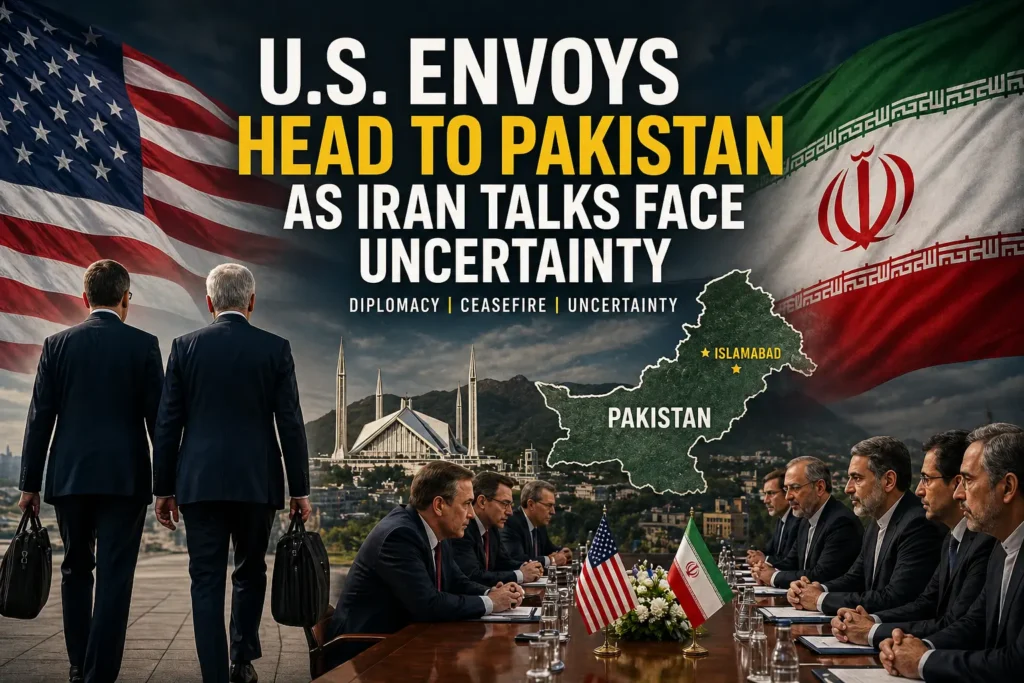
A fresh diplomatic effort in the Middle East has been surrounded by uncertainty, as United States envoys were reported to be preparing for travel to Pakistan for potential discussions linked to Iran. The development has been viewed as a significant step in efforts to stabilize tensions, although expectations for a major breakthrough have remained cautious. The situation has been shaped by indirect negotiations, shifting strategies, and continued geopolitical pressure.
Diplomatic Efforts Centered on Pakistan
It has been indicated that Pakistan was selected as a potential venue for renewed diplomatic engagement between the United States and Iran. The country has previously played the role of a mediator, offering a neutral environment where indirect communication could be facilitated. In this context, U.S. envoys were expected to engage with Pakistani officials, who would then communicate with Iranian representatives.
The structure of the talks was designed to avoid direct interaction between the United States and Iran. This format has been preferred by Iran, which has consistently maintained that negotiations should not be conducted face-to-face under current conditions. As a result, the diplomatic process has relied heavily on intermediaries, which has slowed progress and added complexity.
Confusion Over Travel Plans and Strategy
Uncertainty increased when conflicting reports emerged regarding the status of the U.S. envoys’ visit. It was suggested that the trip might be delayed or reconsidered due to dissatisfaction with the pace of negotiations. These developments reflected internal debates within U.S. leadership regarding the effectiveness of ongoing diplomatic efforts.
At the same time, signals from Iran suggested that new proposals might be under consideration. This created a mixed picture, where opportunities for dialogue appeared to exist, but were overshadowed by hesitation and strategic recalculations. The rapid changes in direction highlighted the fragile nature of the diplomatic environment.
Iran’s Firm Negotiation Stance
Iran’s position has remained consistent throughout the process. It has been emphasized that negotiations should take place without pressure, including economic sanctions or military threats. Iranian officials have repeatedly stated that they would not engage in direct talks unless certain conditions were met.
Indirect negotiations have therefore been preferred, with communication routed through mediating countries. This approach has allowed Iran to maintain its diplomatic stance while still participating in discussions. However, it has also limited the speed and effectiveness of negotiations, as messages must pass through multiple channels.
Internal dynamics within Iran have also influenced its approach. Different factions within the leadership have held varying views on how to handle negotiations with the United States. These differences have contributed to delays and have made it more difficult to present a unified position.
Ceasefire Conditions Remain Fragile
The diplomatic efforts have taken place against the backdrop of a temporary ceasefire. This ceasefire was established after a period of heightened tensions, and it has been described as fragile and conditional. Both sides have retained the ability to resume more aggressive actions if talks fail.
Despite the ceasefire, pressure tactics have continued. Economic measures and strategic positioning have been used to maintain leverage during negotiations. These actions have added to the complexity of the situation and have made it harder to build trust between the parties.
The fragile nature of the ceasefire has increased the urgency of diplomatic efforts. Without meaningful progress, there is a risk that tensions could escalate once again, potentially leading to further instability in the region.
Key Issues Blocking Progress
Several major challenges have prevented a comprehensive agreement from being reached. One of the most significant issues has been Iran’s nuclear program. The United States has sought strict limitations and long-term monitoring, while Iran has insisted on its right to pursue nuclear activities for peaceful purposes.
Sanctions have also been a major point of contention. Iran has demanded relief from economic restrictions as a condition for further engagement, while the United States has been cautious about lifting these measures without clear commitments.
Regional security concerns have added another layer of complexity. Disagreements over influence and involvement in neighboring countries have made it more difficult to find common ground. These issues have been deeply rooted and cannot be resolved quickly, which has slowed the overall progress of negotiations.
Regional and Global Impact
The uncertainty surrounding the talks has had implications beyond the immediate parties involved. The Middle East has remained in a sensitive state, with multiple conflicts and alliances influencing the broader situation. Any breakdown in negotiations could have ripple effects across the region.
Global economic concerns have also been raised, particularly in relation to energy markets. Strategic routes for oil and trade have been closely monitored, as disruptions could lead to price increases and supply challenges. The ongoing tensions have therefore been watched closely by international stakeholders.
The situation has demonstrated how regional conflicts can have far-reaching consequences. Stability in one area has been linked to economic and political conditions around the world, making diplomatic efforts even more important.
Pakistan’s Role as a Mediator
Pakistan’s involvement has been seen as a key element in the diplomatic process. By offering a platform for indirect talks, it has helped maintain communication between the United States and Iran. Its position as a mediator has been strengthened by its relationships with both countries.
The use of Pakistan as a venue has been intended to create a neutral environment where discussions could take place without added pressure. This has been viewed as a practical approach, given the reluctance of the primary parties to engage directly.
However, the effectiveness of mediation has been limited by the lack of direct dialogue. While communication has been maintained, the absence of face-to-face interaction has reduced the chances of achieving quick and decisive outcomes.
Outlook for Future Negotiations
The future of the diplomatic process has remained uncertain. While both sides have expressed a willingness to continue discussions, their positions have remained firm on key issues. This has made it difficult to predict when or how progress might be achieved.
Further talks are expected to depend on changes in strategy and the willingness of both parties to make compromises. The role of mediators will likely continue to be important, as indirect communication remains the preferred method.
The continuation of the ceasefire will also depend on the success of negotiations. If progress is not made, there is a possibility that tensions could rise again, leading to renewed conflict.
Conclusion
The planned movement of U.S. envoys toward Pakistan has highlighted ongoing efforts to revive diplomacy with Iran. However, the process has been marked by uncertainty, shifting strategies, and unresolved disagreements. While opportunities for dialogue have existed, they have been limited by structural challenges and mutual distrust.
The situation has underscored the complexity of international diplomacy, where progress is often slow and uncertain. The outcome of these efforts will have significant implications for regional stability and global economic conditions. For now, the path forward remains unclear, and the success of future negotiations will depend on the ability of both sides to find common ground.