


Wisconsin lawmakers are advancing legislation that would allow tribes to offer statewide mobile sports betting through a “hub-and-spoke” model, despite online wagering otherwise being illegal under state law.
The Wisconsin Assembly has advanced a bipartisan bill that would authorize statewide mobile sports betting through tribal governments, sending the proposal to the Senate for consideration. The measure, Assembly Bill 601, passed with broad support after a brief floor debate, per a report from Next.io.
Lawmakers backing the bill framed it as a way to regulate an activity that is already occurring through offshore operators and to keep revenue within the state, Next.io wrote.
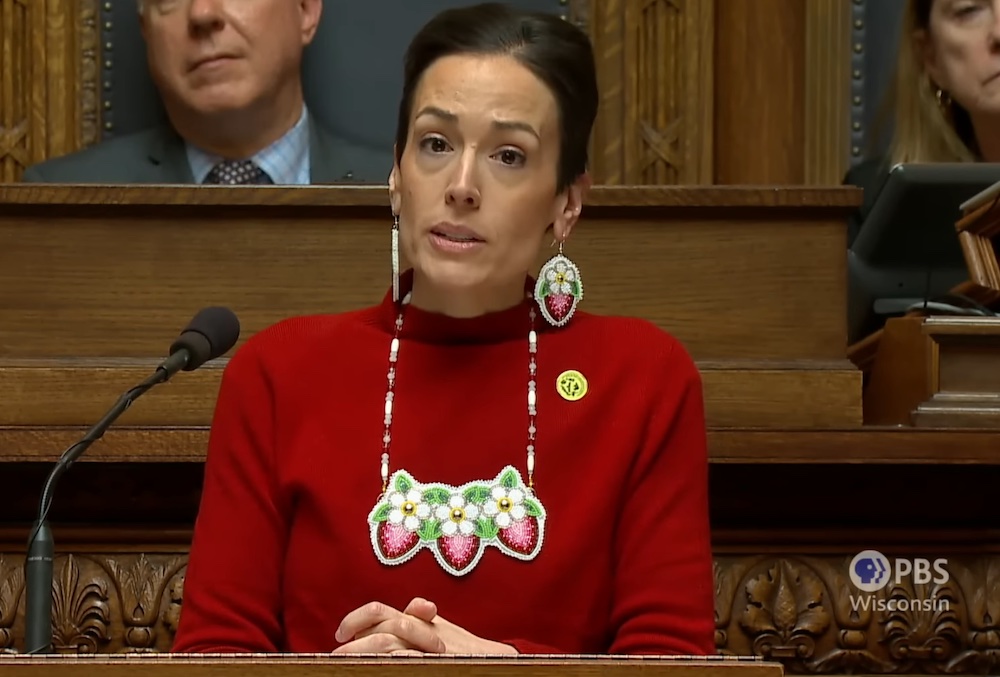
The bill was discussed in the State of the Tribes Address mid-February by Nicole Boyd, chairperson of the Red Cliff Band of Lake Superior Chippewa, speaking on behalf of the Great Lakes Intertribal Council (GLITC).
Boyd cited an “estimated hundreds of millions of dollars” spent on unregulated sports platforms and said legalizing tribally led sports betting would regulate the practice and generate revenue for tribes and the state.
“By allowing a legal framework for mobile sports wagering, the state will see increased revenue through the state gaming compacts and consumers will have the legal protection needed to ensure that they receive fair play,” Boyd told the assembly. “Let’s get this work done so we can provide something that will truly benefit Wisconsin.”
According to the bill text, AB 601 would allow tribes to offer mobile wagering to anyone physically located within Wisconsin’s borders. Bettors would not need to be on tribal land to place a wager, but the wager itself would be legally deemed to occur on tribal land through a hub-and-spoke structure.
The bill would also authorize tribes to partner with commercial operators for branding and technology, subject to compact amendments with the governor’s office and federal approval.
The measure does not impose a state tax on wagers, but compact amendments typically include negotiated revenue-sharing provisions.
Lawmakers told the Washington Examiner that the measure could help Wisconsin tribes expand economic development efforts and compete with neighboring states that already offer mobile betting. Industry analysts cited by Next.io noted that Wisconsin’s population and existing casino market could support a meaningful mobile handle, though exact projections vary widely depending on participation rates and operator partnerships.
Opponents in the Assembly raised concerns about expanding gambling access and the speed at which the bill moved, according to the Examiner. They argued that mobile wagering could increase problem gambling and questioned whether the state should rely on compact negotiations rather than statutory guardrails.
Legal precedent shapes hub-and-spoke debate
The bill relies on a legal framework that’s been tested in federal court in recent years.
Under this model, all bets are routed through servers located on tribal land, even when the bettor is elsewhere within the state. The legal theory is that the wager occurs where it is accepted, not where the bettor is physically located. That interpretation has been upheld in federal courts in Florida and affirmed indirectly by the U.S. Supreme Court, per prior Tribal Business News reporting.
In 2024, the Supreme Court declined to hear a challenge to the Seminole Tribe of Florida’s compact with the state, leaving in place a D.C. Circuit ruling that allowed the tribe to offer statewide mobile sports betting. The appellate court found that the Indian Gaming Regulatory Act does not prohibit compacts from addressing gaming activity that occurs off tribal land, so
long as the compact itself authorizes gaming on tribal land. By declining review, the Supreme Court left that interpretation intact, clearing a pathway for similar compact structures in other states.
Stephen Hart, leader of Lewis Roca’s Indian law practice group, told Tribal Business News in its June 2024 story that an intact lower court decision on Florida’s compact established precedent.
“Because [the Supreme Court] earlier denied a stay, nothing now stops tribes from doing sports betting and internet gaming from their servers on their Indian lands and taking bets from anywhere in the state,” Hart said. “The tribes will now have to work with their state governments, but with a compact they will be able to conduct internet gaming.”
If the Wisconsin Senate approves AB 601, the governor’s office would need to negotiate compact amendments with participating tribes, followed by federal review from the Department of the Interior.
The timeline would depend on how quickly compact negotiations proceed and how many tribes choose to participate, according to Next.io.