

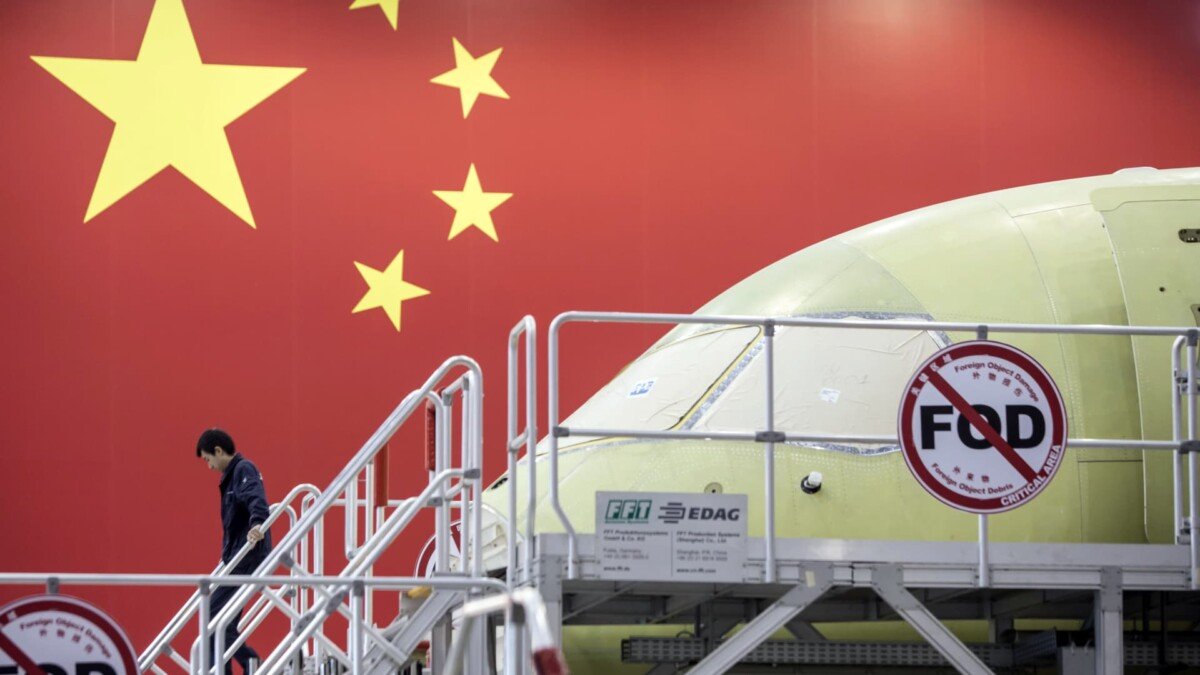
On August 12, 2026, the Commercial Aircraft Corporation of China (COMAC) announced that its flagship narrow‑body jet, the C919, completed its first scheduled international commercial flight. The milestone flight, operated by a Chinese carrier, carried passengers from Beijing to a destination outside China, demonstrating the aircraft’s readiness for cross‑border service and signaling COMAC’s intent to challenge the long‑standing duopoly of Boeing and Airbus in the global aviation market.
Background: The C919 Program
COMAC began developing the C919 in the early 2010s as part of China’s broader strategy to reduce dependence on foreign aircraft manufacturers and to establish a domestic aerospace industry capable of competing worldwide. The C919 is designed to seat 158 to 168 passengers in a two‑class configuration, with a maximum range of approximately 4,400 kilometers. The aircraft is intended to serve short‑ and medium‑haul routes, a market segment dominated by Boeing’s 737 and Airbus’s A320 families.
After a series of domestic test flights and certification milestones, the C919 received Chinese civil aviation authority approval in 2024. International certification, a prerequisite for cross‑border operations, has been a key hurdle. The August 12 flight marks the first time the aircraft has carried passengers on an international route, indicating that COMAC has achieved the necessary regulatory approvals from foreign aviation authorities.
Significance of the First International Flight
For COMAC, the inaugural international flight is more than a symbolic achievement; it represents the culmination of years of investment in research, development, and manufacturing infrastructure. The flight demonstrates that the C919 can meet the stringent safety and performance standards required by airlines and regulators outside China.
From an industry perspective, the C919’s entry into international service introduces a new competitor into the narrow‑body market. Boeing and Airbus have long maintained a near‑duopoly, with the 737 and A320 families accounting for the majority of global narrow‑body aircraft sales. The C919’s presence could spur price competition, encourage innovation, and provide airlines in emerging markets with a locally produced alternative.
Market Implications
- Price Competition: The C919 is priced lower than comparable Boeing and Airbus models, potentially offering airlines a cost advantage on short‑haul routes.
- Supply Chain Diversification: Airlines may benefit from a broader supplier base, reducing reliance on a single manufacturer.
- Regional Growth: The C919 could support the expansion of regional carriers in Asia, Africa, and Latin America, where demand for narrow‑body aircraft is rising.
Challenges Ahead
Despite the milestone, COMAC faces several challenges before it can achieve significant market share. These include:
- Global Certification: While the first international flight indicates progress, full certification from all major aviation authorities is required for widespread adoption.
- After‑Sales Support: Building a robust maintenance, repair, and overhaul (MRO) network is essential for long‑term customer confidence.
- Competitive Response: Boeing and Airbus may respond with new models or price adjustments to defend their market positions.
Industry Reactions
Industry analysts have noted that the C919’s entry could accelerate the pace of competition in the narrow‑body segment. Some experts suggest that airlines in China and neighboring countries may be particularly receptive to the aircraft, given its domestic origin and lower operating costs.
Conversely, some stakeholders caution that the C919’s success will depend on sustained quality, reliability, and the ability to meet the operational demands of airlines worldwide.
Conclusion
The C919’s first international commercial flight marks a pivotal moment for COMAC and the global aviation industry. While the aircraft’s long‑term impact remains to be seen, the milestone underscores China’s growing capabilities in aerospace manufacturing and its ambition to reshape the competitive landscape dominated by Boeing and Airbus.
Source: CNBC