

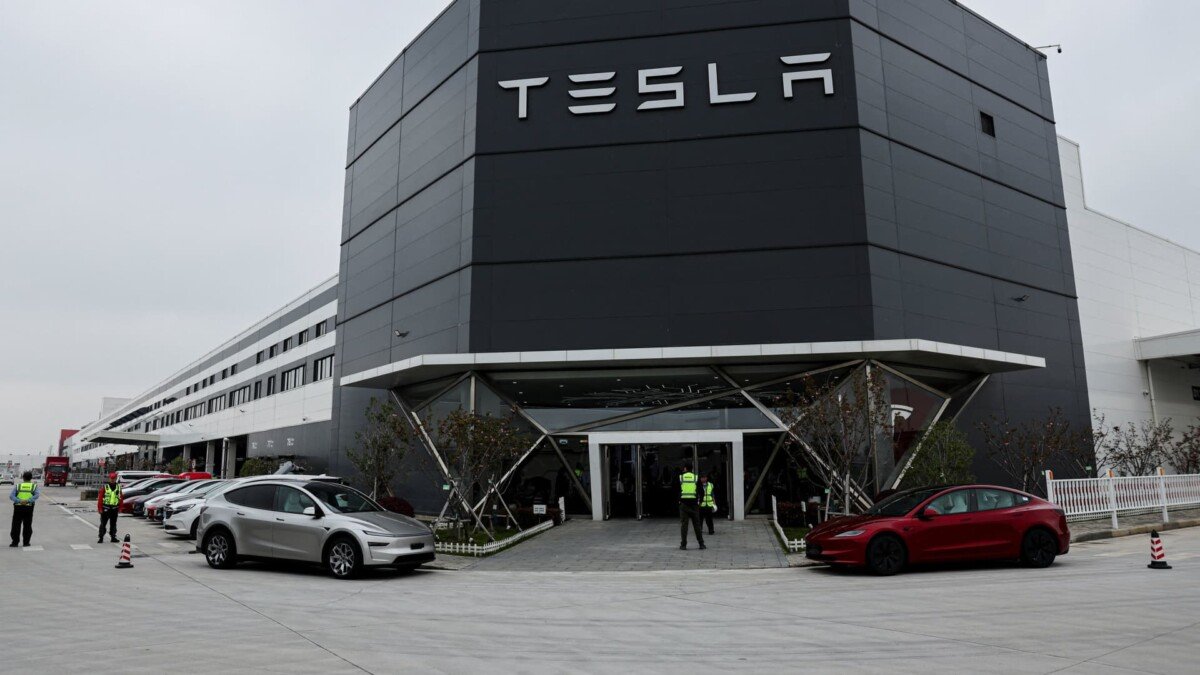
Tesla Inc. has announced a voluntary recall of approximately 3 million vehicles sold in China, citing safety concerns related to doorhandles and deficiencies in its driver monitoring system. The recall, announced on August 21, 2026, is the latest operational hurdle for the electric‑vehicle manufacturer as it seeks to maintain compliance with Chinese safety regulations and protect its customers.
Scope of the Recall
The recall covers a broad range of models that have been delivered to Chinese consumers over the past several years. While Tesla has not disclosed a specific breakdown of affected models, the company confirmed that the issue spans multiple vehicle lines, including its popular Model 3 and Model Y variants. The recall is expected to affect roughly 3 million vehicles, a figure that represents a significant portion of Tesla’s domestic sales volume.
Doorhandle Safety Concerns
According to Tesla, the doorhandle issue involves a design flaw that could compromise the safety of passengers and pedestrians. The company stated that the doorhandles may not operate reliably under certain conditions, potentially leading to accidental openings or failures to secure the vehicle properly. Tesla’s engineering team has identified the root cause as a manufacturing defect that could affect the structural integrity of the handle assembly.
Driver Monitoring System Deficiencies
The second component of the recall involves Tesla’s driver monitoring system, a feature designed to detect driver attention and alert the driver to potential distractions. Tesla reported that the system’s sensors and software algorithms have exhibited inconsistent performance, failing to accurately identify driver fatigue or inattention in some cases. The company has pledged to update the software and recalibrate the sensors to ensure reliable operation.
Company Response and Next Steps
In a statement released to the press, Tesla’s spokesperson emphasized the company’s commitment to safety and regulatory compliance. Tesla will work with local authorities and service centers to perform the necessary repairs and software updates. Customers who own affected vehicles will receive notifications and instructions on how to schedule a service appointment. Tesla has also indicated that it will provide a free replacement for any parts that are found to be defective.
Impact on Tesla’s Operations
The recall is expected to have a measurable impact on Tesla’s supply chain and service operations in China. The company will need to coordinate with parts suppliers, logistics partners, and service centers to manage the large volume of vehicles requiring attention. While Tesla has not released financial details related to the recall, industry analysts anticipate that the company will incur significant costs associated with parts replacement, labor, and potential downtime for affected vehicles.
Regulatory Context
China’s automotive safety regulations have become increasingly stringent in recent years, with authorities demanding higher standards for vehicle design and driver assistance systems. Tesla’s recall comes amid a broader regulatory push to ensure that electric vehicles meet the same safety benchmarks as traditional internal‑combustion models. The company’s proactive approach to addressing the issues is intended to demonstrate compliance and maintain consumer confidence.
Industry Reactions
Automotive analysts have noted that the recall underscores the challenges faced by electric‑vehicle manufacturers in scaling production while maintaining rigorous safety standards. Some experts suggest that the recall could prompt other automakers to review their own safety systems, particularly those that rely heavily on software and sensor technology.
Looking Ahead
Tesla has reiterated its focus on continuous improvement and innovation. The company plans to roll out software updates that enhance driver monitoring capabilities and to redesign the doorhandle mechanism to eliminate the identified flaw. Tesla’s leadership has expressed confidence that the recall will be completed efficiently and that the company will continue to deliver high‑quality vehicles to its Chinese customer base.
Source: CNBC